

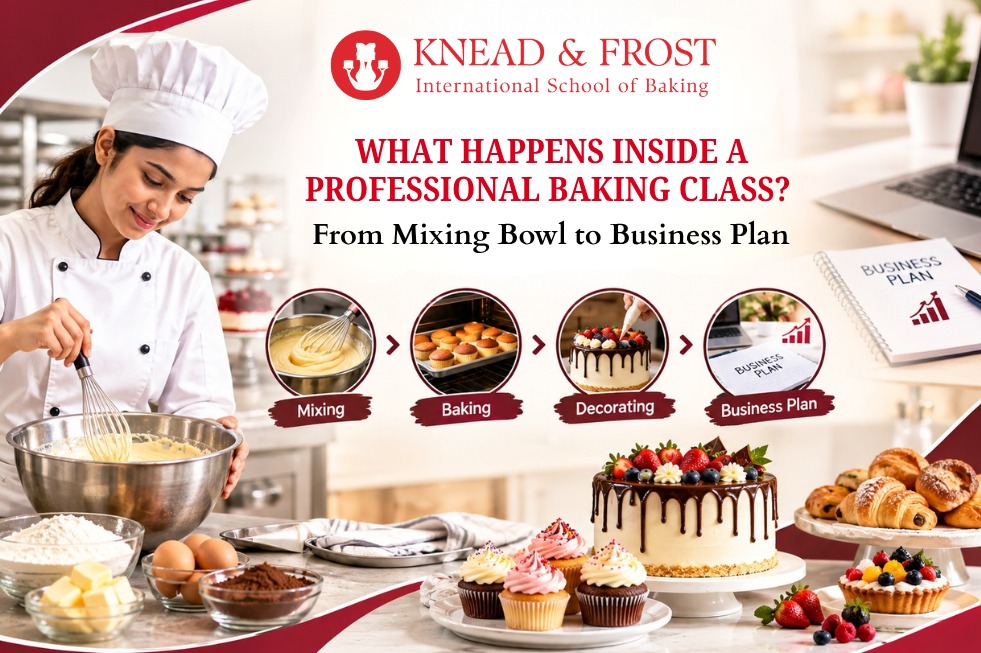

Have you ever wondered what actually happens inside a professional baking class? A professional baking course is very different from simply watching recipes online or baking occasionally at home. Students learn how ingredients behave, how professional equipment is used, how recipes are developed, how products are presented, and how baking skills can eventually be turned into a career or business. From the first mixing bowl to understanding bakery costing and business planning, a well-structured professional baking class can introduce students to the complete journey of becoming a professional baker.
Starting With the Fundamentals of Professional Baking
Every professional baker begins with a strong understanding of the basics. In a baking class, students are introduced to ingredients such as flour, sugar, butter, eggs, yeast, cream, chocolate, and other commonly used bakery ingredients. Instead of simply following a recipe, students learn why each ingredient is used and how it affects the texture, flavour, structure, and appearance of the final product. Understanding these fundamentals helps students become more confident when working with different recipes and allows them to troubleshoot common baking problems.
Learning Through Hands-On Baking Practice
Practical training is one of the most important parts of a professional baking course. Students get the opportunity to measure ingredients, prepare mixtures, handle dough, operate baking equipment, and produce different bakery products themselves. This hands-on approach helps beginners understand the difference between home baking and professional production. Trainers can also identify mistakes during the process and guide students on how to improve their techniques. Regular practical sessions help develop accuracy, consistency, speed, and confidence.
From Cakes and Cookies to Breads and Pastries
A professional baking class usually introduces students to a wider range of products rather than focusing only on cakes. Depending on the course curriculum, students may work with cakes, cookies, breads, pastries, brownies, desserts, and other bakery products. Learning different categories allows students to understand how techniques change from one product to another. For example, bread making requires a different understanding of yeast and fermentation, while pastry production requires precision in handling dough, butter, temperature, and layering.
Understanding Professional Baking Equipment
Professional baking also involves learning how to work with commercial equipment. Students can become familiar with ovens, mixers, weighing equipment, proofing systems, baking trays, moulds, piping tools, refrigeration equipment, and other bakery tools. Knowing how to use equipment correctly can improve both product quality and kitchen efficiency. This knowledge becomes particularly useful for students who plan to work in commercial bakeries, hotels, cafés, restaurants, or eventually purchase equipment for their own bakery business.
Learning Cake Decoration and Product Presentation
Baking does not end when the product comes out of the oven. Presentation plays an important role in attracting customers, particularly in the custom cake and celebration cake market. Professional baking training may include techniques related to frosting, piping, finishing, decoration, and presentation. Students learn how to create products that are not only tasty but also visually appealing. Developing these skills can open opportunities in cake design, custom cakes, celebration desserts, and speciality bakery products.
Food Hygiene and Professional Kitchen Practices
A professional baking environment requires strict attention to hygiene and safety. Students learn how ingredients should be stored, how equipment and work surfaces should be maintained, and how to handle food safely. Professional kitchen discipline also includes organising ingredients, keeping the workspace clean, managing production efficiently, and following proper hygiene procedures. These habits are essential whether someone plans to work in a bakery or start a home-based baking business.
Learning Recipe Consistency and Production Skills
One cake turning out perfectly at home is different from producing the same cake repeatedly for customers. Professional baking classes help students understand the importance of consistency. The same recipe should produce a reliable result when prepared multiple times. Students learn how accurate measurements, preparation methods, oven settings, ingredient quality, and timing can affect the final product. This ability to maintain consistent quality becomes especially important when moving into professional bakery production or accepting customer orders.
Understanding Bakery Costing and Pricing
A professional baker who wants to run a business needs to understand the financial side of baking as well. Baking training can introduce students to the basics of ingredient costing, portion calculation, packaging expenses, labour considerations, and pricing. Knowing the actual cost of producing a cake or dessert helps prevent underpricing and supports better business decisions. This is where baking starts moving beyond the mixing bowl and into the world of entrepreneurship.
Turning Baking Skills Into a Business Plan
For students interested in entrepreneurship, professional baking can become the foundation for building a bakery business. A business plan can involve deciding what products to sell, identifying the target customers, choosing between a home bakery and physical location, estimating equipment requirements, planning production, developing a brand, and creating a marketing strategy. Students can gradually understand how their practical baking skills can be converted into a sustainable business model.
Can a Professional Baking Class Prepare You for a Career?
A professional baking course can provide the practical foundation needed to explore different career paths in the bakery and pastry industry. Depending on their interests and experience, students can work towards becoming professional bakers, pastry chefs, cake designers, bakery assistants, or entrepreneurs. Some may choose to work in hotels and restaurants, while others may start a home bakery or develop their own speciality cake and dessert brand. The training provides the skills, while continued practice and industry experience help develop professional confidence.
Why Choose a Professional Baking Course Instead of Learning Only Online?
Online recipes are useful for learning individual products, but they may not provide a complete professional learning experience. A structured professional baking course allows students to learn techniques in sequence, practise them under guidance, understand professional equipment, and receive feedback when something goes wrong. It also provides exposure to different types of bakery products and professional kitchen practices. For someone serious about making baking a career, hands-on training can provide a stronger foundation than learning recipes individually.
From Mixing Bowl to Career: Where Can Baking Take You?
The journey of a professional baker can begin with something as simple as learning how to mix ingredients correctly, but it can eventually lead to much bigger opportunities. With the right training and experience, baking skills can develop into a career in pastry kitchens, bakeries, cafés, hotels, restaurants, or even entrepreneurship. Some professionals build home bakeries, while others specialise in custom cakes, artisan products, desserts, or teaching. The possibilities depend on the skills you develop and the direction you choose.
Final Thoughts
A professional baking class is not simply about learning recipes. It is about understanding ingredients, developing practical techniques, using professional equipment, maintaining consistency, following hygiene standards, presenting products professionally, and understanding the business behind baking. For someone who dreams of becoming a professional baker or starting a bakery, this complete approach can turn basic interest into practical career skills.
From the mixing bowl to the business plan, professional baking training can be the first step towards building a rewarding career in the baking and pastry industry.