

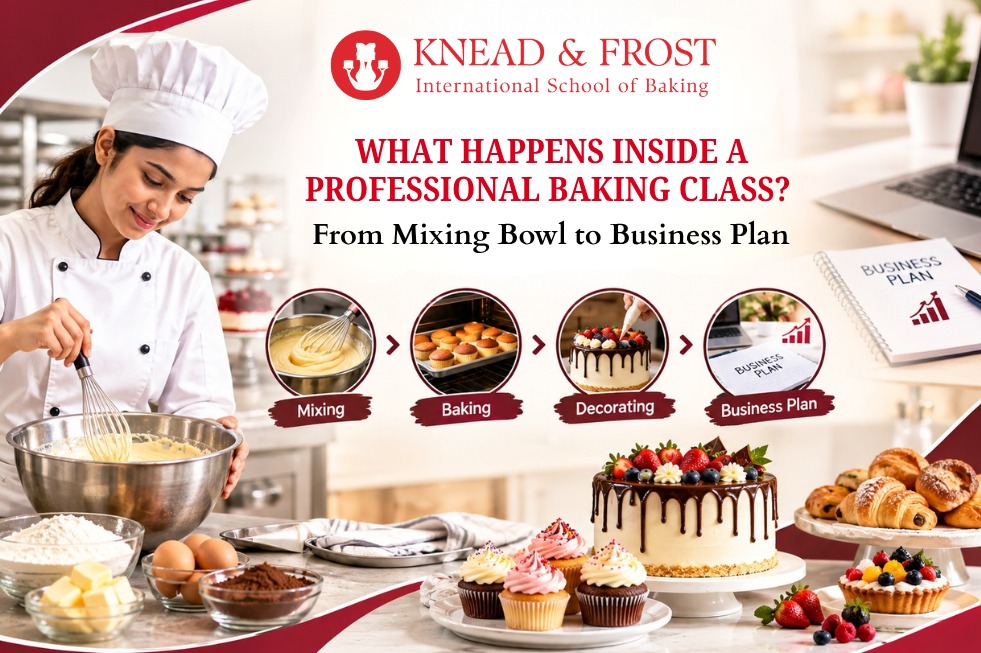

Baking at home can be an enjoyable and creative experience, but working as a professional pastry chef requires a much deeper understanding of baking, pastry production, ingredients, techniques, presentation, and kitchen operations. While a home baker may focus mainly on preparing products for family, friends, or individual customer orders, a pastry chef is trained to work in professional kitchens and maintain consistent quality under commercial conditions. This is where a structured pastry chef course or Diploma in Pastry and Baking can make an important difference.
Home Baker vs Professional Pastry Chef: What Is the Real Difference?
A home baker generally learns through personal experience, online recipes, workshops, or repeated practice. The focus may be on cakes, cookies, brownies, cupcakes, and customised celebration orders. A professional pastry chef, on the other hand, needs knowledge of a much wider range of products and professional techniques. They may work with breads, laminated pastries, desserts, chocolates, plated desserts, cakes, creams, fillings, and other specialised preparations. Professional pastry training is designed to develop consistency, technical knowledge, speed, presentation, and kitchen discipline.
Why Is a Diploma in Pastry and Baking Different From Learning at Home?
A Diploma in Pastry and Baking provides structured learning rather than depending only on trial and error. Students are introduced to professional baking methods, ingredient functions, pastry techniques, cake production, bread making, dessert preparation, food safety, and professional kitchen practices. Practical training allows students to understand not only how to follow a recipe but also why particular ingredients, temperatures, measurements, and techniques are used. This structured approach can help students build a stronger foundation for a career in the baking and pastry industry.
What Do You Learn in a Professional Pastry Chef Course?
A professional pastry chef course can cover several areas of baking and pastry production. Depending on the programme, students may learn fundamental baking techniques, advanced cake preparation, bread and viennoiserie, pastry making, chocolate and dessert preparation, cake decoration, plating, and professional presentation. Students can also learn about ingredient selection, kitchen hygiene, equipment handling, production planning, and maintaining consistency. This broad practical exposure helps aspiring pastry chefs understand how a professional bakery or pastry kitchen actually operates.
Why Practical Training Matters for an Aspiring Pastry Chef
Professional baking is highly dependent on technique and precision. Small changes in ingredient measurement, mixing, temperature, fermentation, or baking time can affect the final product. Practical training allows students to work directly with professional equipment and understand these differences through hands-on experience. Instead of simply watching a recipe being prepared, students can practise the techniques themselves, identify mistakes, and improve their skills under guidance. This makes practical training an important part of becoming a professional pastry chef.
Can a Diploma in Baking Help You Build a Pastry Chef Career?
A recognised diploma in baking and pastry can provide a foundation for students who want to explore professional opportunities in the hospitality and bakery industry. After completing their training, aspiring professionals can look for opportunities in bakeries, cafés, restaurants, hotels, resorts, catering companies, and other food businesses. With experience, they can specialise in areas such as pastry production, cake decoration, artisan baking, chocolate, or dessert preparation. A diploma alone does not replace experience, but it can help students develop the technical foundation required to enter the industry.
Is a Pastry Chef Course Suitable for Someone Starting From Zero?
You do not necessarily need to be an experienced baker to begin professional training. A well-structured professional pastry chef course can start with fundamental concepts before progressing to more advanced techniques. Beginners can learn how ingredients work, how to use baking equipment, how to follow professional recipes, and how to maintain hygiene and consistency. With regular practical practice, someone who starts with basic knowledge can gradually develop the skills required for professional baking.
Can Professional Pastry Training Help You Start Your Own Bakery?
A pastry and baking diploma is not limited to people who want a job. The skills developed through professional training can also be useful for aspiring entrepreneurs. Understanding professional recipes, production methods, ingredient usage, presentation, and consistency can help when developing a bakery menu or home-based baking business. Students can first gain experience and then explore options such as a home bakery, customised cake business, dessert brand, café, or full-scale bakery. Additional knowledge of costing, marketing, and business management can further support the transition from baker to entrepreneur.
What Career Opportunities Are Available After a Pastry and Baking Diploma?
A professional qualification in pastry and baking can open different career directions depending on a student’s interests and experience. Graduates can explore roles such as pastry chef, commis pastry chef, baker, cake decorator, chocolatier, bakery production professional, or pastry assistant. Those who gain experience can progress into senior kitchen roles or explore teaching and training opportunities. Others may choose entrepreneurship and build their own bakery or custom cake brand. This flexibility is one of the major advantages of choosing pastry and baking as a career.
Why Choose a Professional Pastry Chef Course Instead of Learning Only From YouTube?
Online videos and recipes are useful for learning individual techniques, but professional pastry training offers a more structured learning experience. YouTube may show you how to prepare a particular cake or pastry, but it may not provide a complete understanding of professional production, ingredient functionality, kitchen workflow, hygiene, consistency, and troubleshooting. A professional course combines theory with hands-on practice and guidance, allowing students to develop skills systematically rather than learning randomly from different sources.
Is a Diploma in Pastry and Baking a Good Career Investment?
For students who genuinely want to pursue baking professionally, a Diploma in Pastry and Baking can be a valuable starting point. It can provide structured practical exposure, introduce students to different areas of the pastry industry, and help them understand which specialisation suits their interests. However, success in the baking industry also depends on practice, creativity, discipline, work experience, and the ability to continuously learn new techniques. The diploma can provide the foundation, while experience helps turn that foundation into a professional career.
Final Thoughts
The biggest difference between a home baker and a professional pastry chef is not simply the number of cakes they can make. It is the depth of knowledge, technical skill, consistency, speed, creativity, and professional kitchen experience behind their work. If your goal is to move beyond home baking and build a career in the baking and hospitality industry, enrolling in a professional pastry chef course or Diploma in Pastry and Baking can be a strong first step.
For anyone serious about turning their passion for baking into a profession, structured training can help transform a hobby into a long-term career.