
Turning a passion for baking into a professional career requires more than knowing how to prepare cakes and cookies. Employers in bakeries, hotels, cafés, restaurants and pastry kitchens look for candidates who understand baking techniques, maintain hygiene standards, work efficiently and deliver consistent results. For students planning to enter the baking industry, developing these skills can make the transition from classroom learning to a professional kitchen easier.
A pastry chef’s role involves preparing desserts, handling ingredients, managing preparation schedules and maintaining product quality. While entry-level candidates may not need years of experience, they should demonstrate a willingness to learn, a strong foundation in baking and the ability to work as part of a team.
Understanding what employers expect can help aspiring bakers prepare for their first job and build a successful career in the pastry industry.
1. Strong Foundation in Baking and Pastry Techniques
A sound understanding of basic baking methods is one of the first skills employers look for in entry-level candidates. Students should become familiar with ingredient measurement, mixing methods, oven temperature control, baking times and the preparation of common bakery products.
Knowledge of cakes, cookies, breads, pastries and basic desserts can help candidates adapt to different kitchen responsibilities. Depending on the role, employers may also value familiarity with frosting, piping, dough preparation and simple dessert finishing techniques.
Practical training allows students to develop these skills through repeated practice and feedback. The goal is not to master every technique immediately but to understand the fundamentals and apply them consistently.
2. Accurate Ingredient Measurement and Recipe Following
Precision is essential in professional baking because ingredient proportions directly influence product quality. Incorrect measurements can affect texture, flavour, structure and appearance.
Employers expect entry-level bakers to follow recipes carefully, measure ingredients accurately and understand the importance of standardised preparation methods.
Using digital weighing scales, reading recipe instructions and preparing ingredients before production are useful habits to develop. Students should also learn to follow recipes in the correct sequence and avoid making unapproved changes to ingredient quantities.
3. Knowledge of Kitchen Hygiene and Food Safety
Food safety is a fundamental responsibility in every professional kitchen. Pastry chefs and bakery staff regularly handle ingredients such as eggs, dairy products, cream, chocolate and other perishable materials that require appropriate storage and handling.
Employers look for candidates who understand hand hygiene, equipment sanitation, clean work surfaces, safe ingredient storage and the prevention of cross-contamination.
4. Time Management and Organisational Skills
Professional pastry kitchens often prepare several products simultaneously. A single production schedule may involve mixing dough, baking cake layers, preparing fillings, cooling products and finishing desserts.
Without proper organisation, these tasks can lead to delays and inconsistent results.
Entry-level candidates should learn to read recipes in advance, prepare ingredients, arrange equipment and identify tasks that require resting, chilling or cooling time. Keeping the workstation organised also makes it easier to complete tasks efficiently.
Understanding the concept of mise en place, which means preparing and organising ingredients and equipment before cooking or baking, is especially useful.
5. Attention to Detail and Quality Control
A professional pastry chef must pay attention to both the technical and visual aspects of a product. Cakes, pastries and desserts should meet the expected standards for flavour, texture, shape, size and presentation.
Employers value candidates who notice small differences and take responsibility for maintaining quality.
For instance, unevenly baked cookies, poorly shaped croissants, inconsistent portion sizes or incorrectly finished desserts may indicate that a preparation step needs improvement.
6. Creativity and Presentation Skills
Pastry and dessert preparation offers opportunities for creativity, but professional presentation also requires technical control. Employers may look for candidates who can follow established designs, finish products neatly and contribute ideas when appropriate.
Useful skills include basic piping, frosting application, chocolate decoration, glazing, dessert plating and the careful arrangement of garnishes.
Creativity does not always mean producing complicated decorations. A clean finish, balanced colours, consistent shapes and thoughtful presentation can make a significant difference.
7. Teamwork and Communication
A professional bakery depends on coordination between its team members. Bakers may work alongside pastry chefs, kitchen assistants, chefs, storekeepers and service staff.
Employers value candidates who communicate clearly, listen to instructions, ask questions when necessary and cooperate with colleagues. Teamwork is particularly important when several products need to be prepared within a limited period.
Students can develop these skills during practical training by sharing responsibilities, keeping others informed about their tasks and offering assistance when appropriate.
8. Adaptability and Willingness to Learn
Entry-level candidates are not expected to know everything about professional pastry production. However, employers generally appreciate individuals who are open to feedback, willing to practise and able to adapt to different responsibilities.
A bakery may use unfamiliar equipment, follow specific recipes or maintain its own production procedures. New employees must be prepared to learn these methods and follow workplace instructions.
Students can demonstrate adaptability by exploring different baking techniques, practising unfamiliar recipes and learning how to correct common mistakes.
9. Basic Equipment Handling and Maintenance
Professional bakeries use a range of equipment, including commercial ovens, planetary mixers, dough mixers, weighing scales, proofing cabinets and refrigeration units.
Entry-level staff may be required to assist with equipment preparation, ingredient mixing, baking and cleaning. Familiarity with common tools can help candidates understand the production process more confidently.
Maintaining clean equipment, reporting problems and following safe operating procedures are important professional habits that support productivity and workplace safety.
10. Basic Cost Awareness and Waste Reduction
Although advanced financial management may not be necessary for every entry-level role, understanding ingredient usage and waste reduction is valuable.
Students can develop cost awareness by learning how ingredient quantities relate to batch sizes, understanding portion control and following appropriate storage practices.
For candidates interested in eventually opening their own bakery, these habits also provide a useful starting point for learning recipe costing, product pricing, inventory management and production planning.
11. Practical Experience and a Baking Portfolio
Practical experience helps students demonstrate that they can apply what they have learned. Experience may come from supervised training sessions, internships, bakery placements, workshops or personal practice, depending on the opportunities available.
A baking portfolio can strengthen a candidate’s presentation during job applications. It may include photographs of cakes, breads, pastries and desserts, along with brief descriptions of the techniques used.
Candidates should use genuine photographs of their own work and accurately describe their level of involvement. Employers may ask questions about ingredients, preparation methods, baking conditions and challenges encountered during production.
How Can a Professional Baking Course Help Students Prepare for Employment?
A structured professional baking course can help students develop practical skills under guidance, understand ingredient behaviour and gain experience with different baking methods.
When choosing a programme, aspiring pastry chefs should review the curriculum carefully. Useful areas to look for include hands-on baking sessions, bread and pastry preparation, dessert techniques, kitchen hygiene, equipment handling and quality control.
At Knead & Frost, aspiring bakers can explore the available baking education options and identify a programme suited to their interests. Reviewing the course content, practical training opportunities and eligibility requirements can help students make an informed decision.
Conclusion
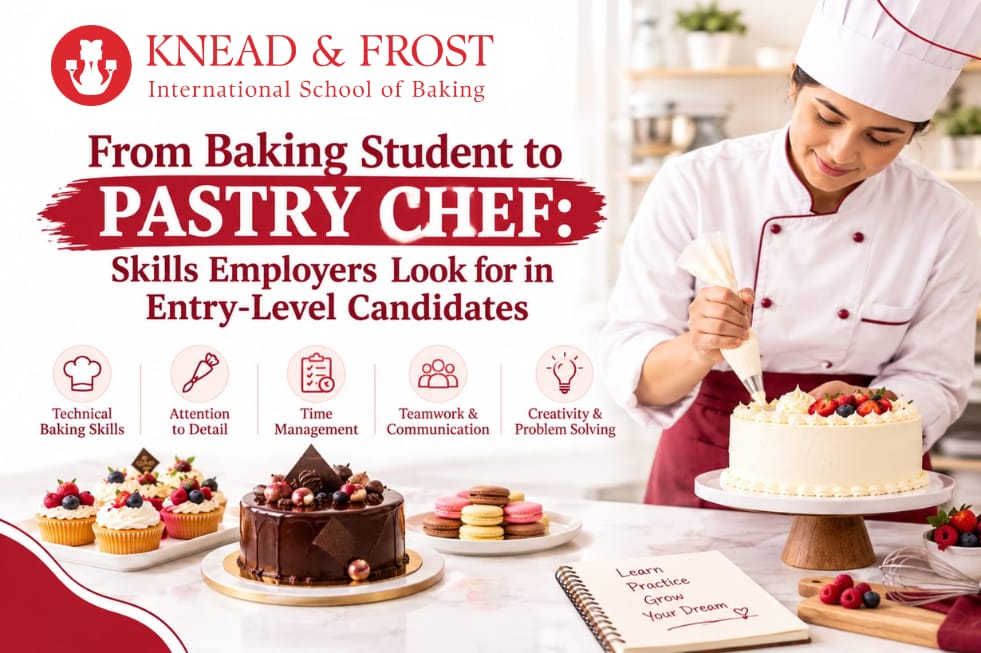
Moving from baking student to pastry chef requires a combination of technical knowledge, practical experience and professional habits. Employers looking for entry-level candidates value accurate measurement, baking fundamentals, food safety, time management, attention to detail, teamwork and a willingness to learn.
Developing these skills during training can help aspiring bakers prepare for the responsibilities of a professional kitchen. Regular practice, constructive feedback and an organised approach to learning can gradually improve both confidence and consistency.
For students who want to build a career in baking, selecting suitable training and gaining practical experience are important first steps. Explore the baking classes in Chennai at Knead & Frost to learn more about available programmes and begin developing the skills needed for your baking career.